As of September 2024, approximately 18.4% of all MA households, an estimated 21.5% of households with children, reported facing food insecurity.
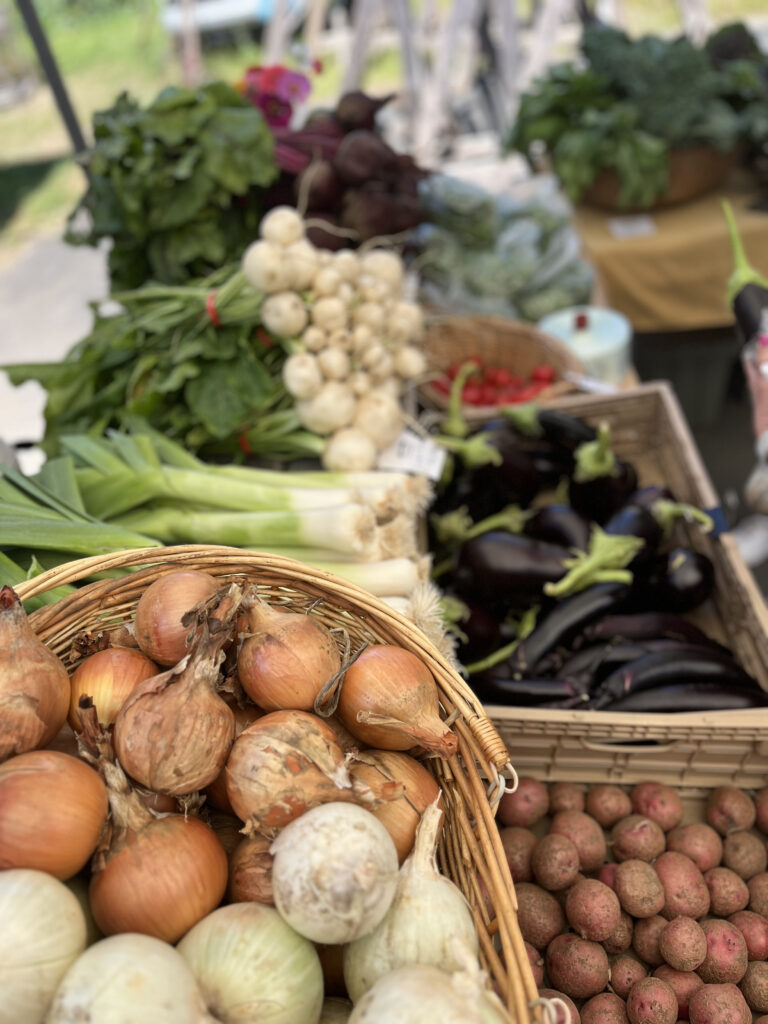
How to access our produce & herbs:
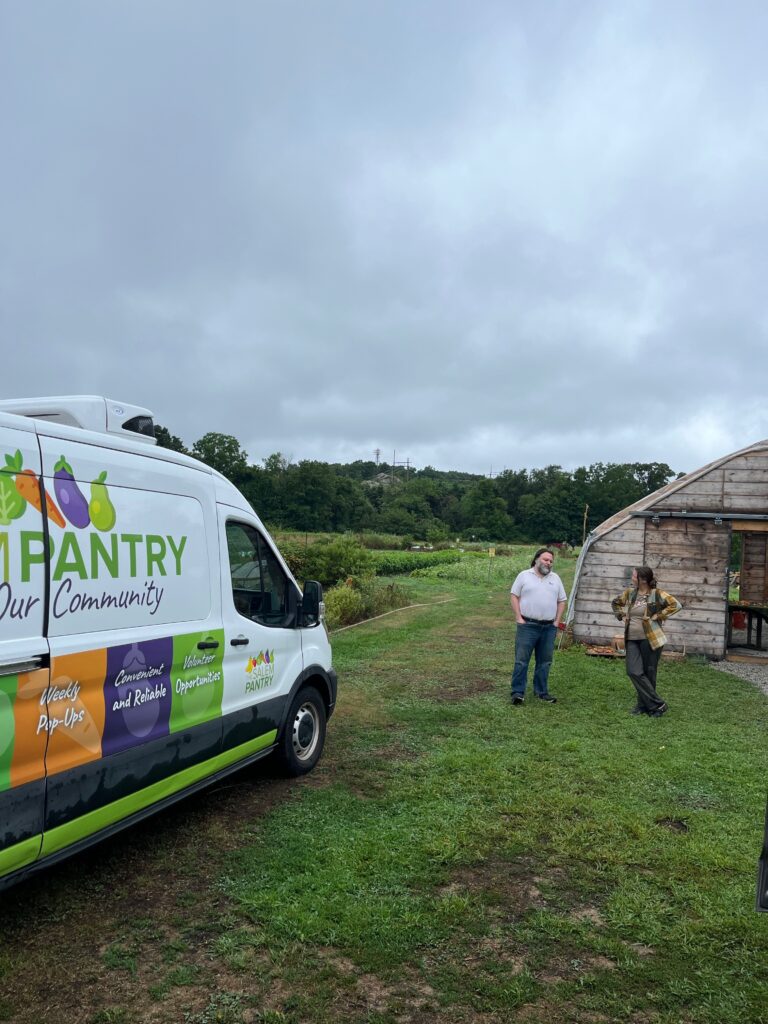
70% of our produce is delivered directly to hunger-relief organizations on the North Shore. You can access our produce at Citizen’s Inn Haven from Hunger, Beverly Bootstraps, and The Salem Pantry.
Farm Share Program
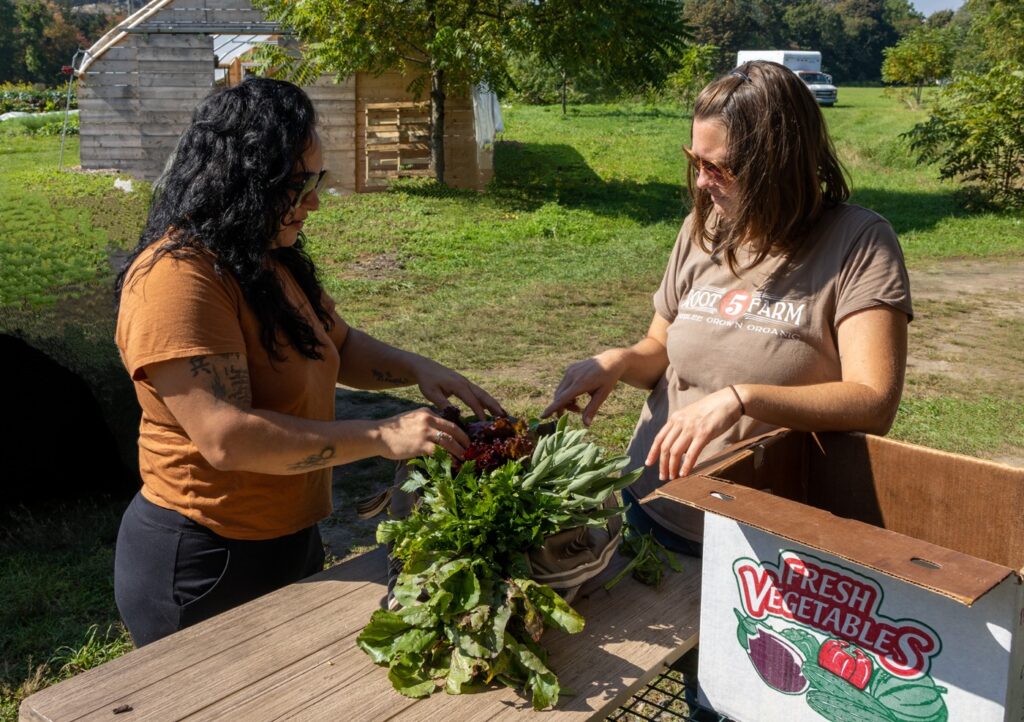
Newhall Fields Community Farm is proud to offer a Farm Share program during the growing season, from July – October. Produce is grown using organic methods, harvested and washed by farm volunteers and staff, right here on conserved land in the heart of Peabody.
Currently we offer shares for pick up, and aim to price shares at affordable rates to expand access to fresh, nutritious produce. In collaboration with the Department of Transitional Assistance (DTA), we participate in the SNAP CSA pilot program, which allows customers to use their SNAP and HIP benefits to purchase their farm share. In addition to SNAP/EBT and HIP, Farmers Market Nutrition Program (FMNP) coupons, and Women – Infants and Children (WIC) coupons, we accept cash, credit/debit, and personal checks.
- We offer one size share at a sliding scale pricing
- Shares are distributed market-style so you can choose your own produce and swap out items with your neighbors
- See our Farm Share page for more information
- If you have any questions, or would like to be added to our sign-up list for 2026, please reach out to cj@newhallfieldscommunityfarm.org
Pop-Up Farm Stands
In addition to accepting SNAP/EBT and HIP, Newhall Fields is certified to accept Farmers Market Nutrition Program (FMNP) coupon benefits for senior citizens and Women – Infants and Children (WIC).
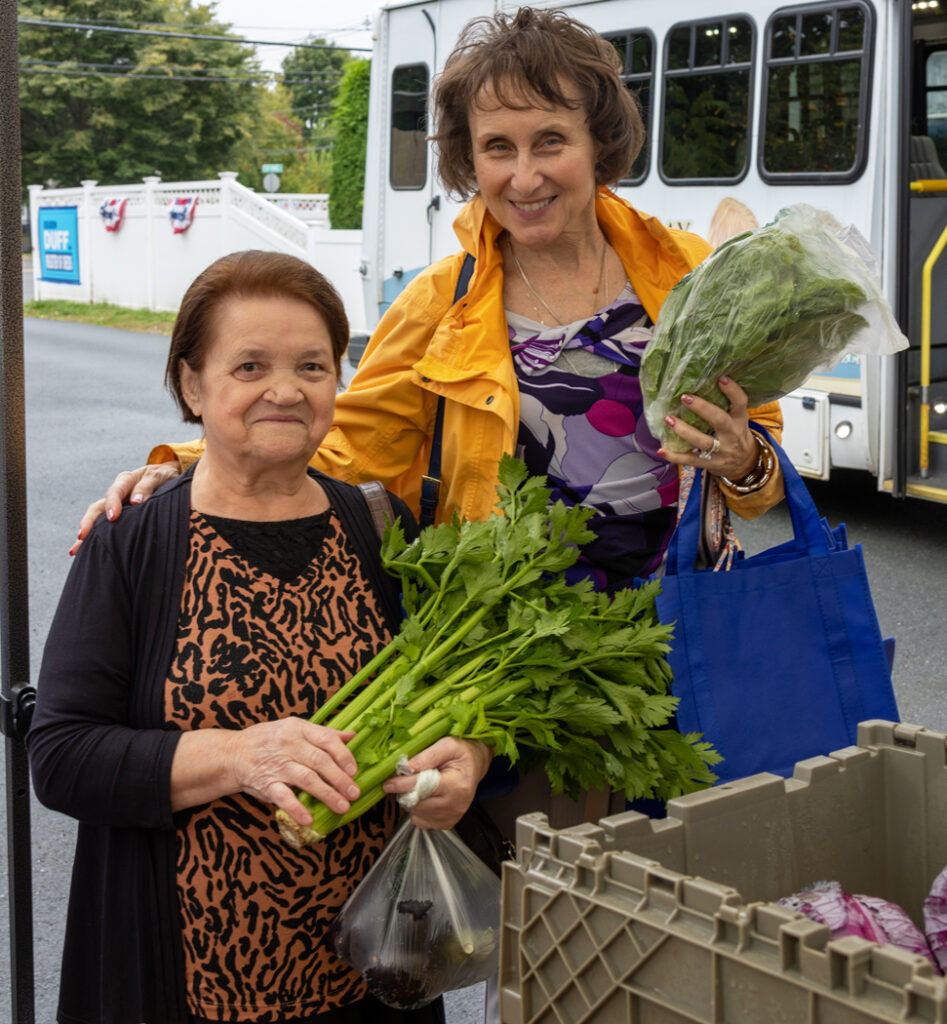
Since we do not currently operate a farm stand, we host two pop-up markets per season at the farm to enable community members to utilize their Farmers Market Nutrition Program Coupons. We work with the Peabody Council on Aging to provide transportation from the Senior Center to the pop-up markets and back again so they can access fresh, local produce during the eligible season.
We welcome all community members to these markets, and accept all methods of payment, including SNAP/EBT, HIP, Senior Farmers Market Coupons, WIC Farmers’ Market coupons, cash, cards, and personal checks.
This year’s Pop-Up Markets will be held on Thursday August 20th and Thursday September 17th, from 11:45am – 1pm
BIPOC households are recovering from the pandemic significantly slower than white households. In 2024, 17.2% of white households with children faced food insecurity, compared to 33.3% of Black households with children, and 34.3% Latino/a households with children were food insecure. [Source: US Census Household Pulse Survey via Project Bread]